Both encrypt by default
Since 2020, Element (then called Riot) has turned on end-to-end encryption by default for direct messages and new private rooms. Public rooms, which anyone can join, aren't encrypted by default.
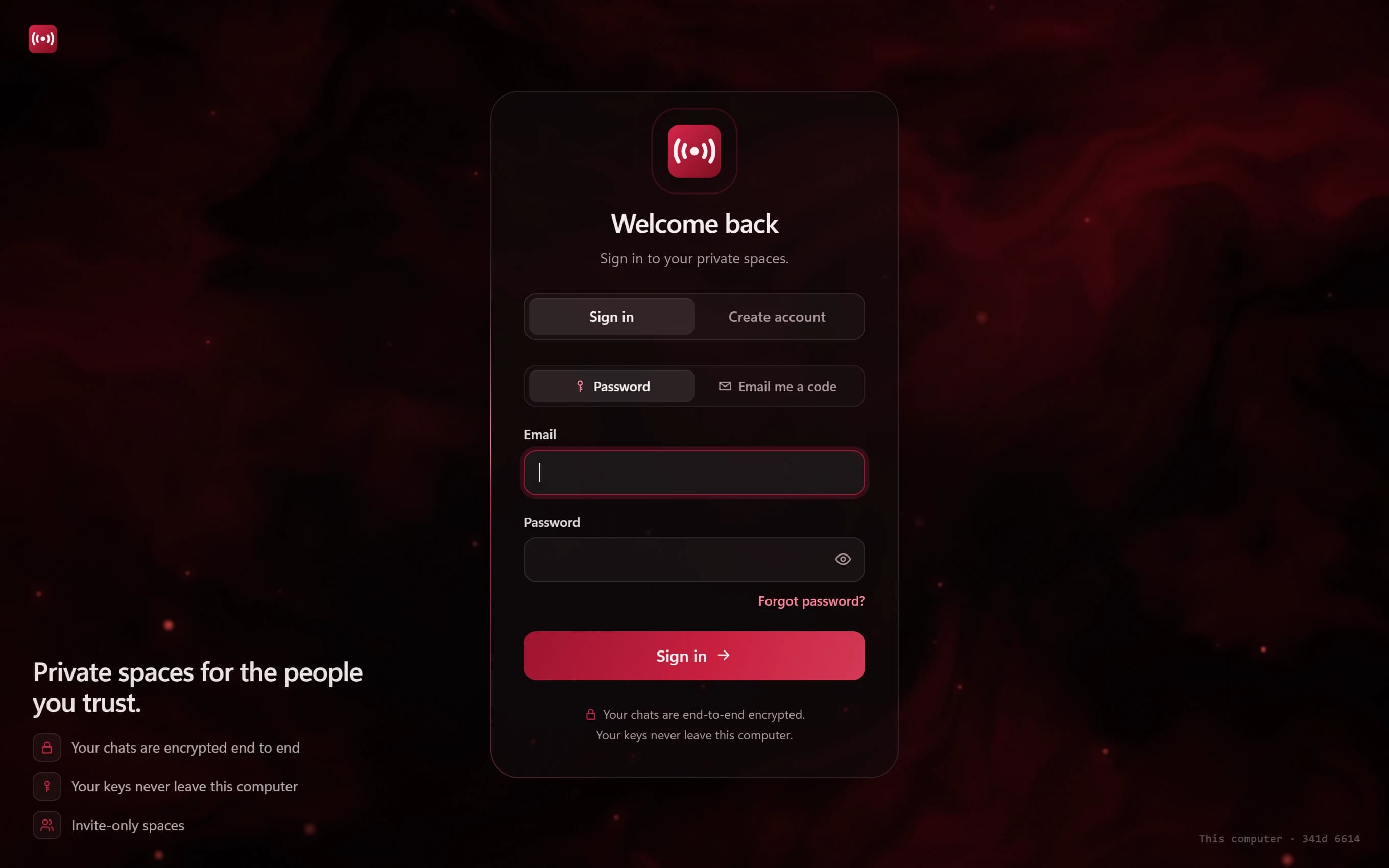
Minamo encrypts every direct message and group chat end to end, with keys made and kept on your computer.
Community spaces: an honest difference
Here Element goes further than Minamo. Its private rooms, the building blocks of a community, are end-to-end encrypted by default. Minamo's channels are not: they're encrypted at rest with keys Minamo holds, so our moderators can act on reports, and every admin access is logged with a reason.
We made that trade on purpose, for safety, and we label it clearly in the app. If you need end-to-end encryption across a whole community, Element offers that and Minamo doesn't.
Federation and self-hosting
Matrix is decentralised. Organisations and individuals run their own servers, which talk to each other, and you can choose or run the server your account lives on. That's real independence.
Minamo is a single service run by the Minamo team. It isn't federated and isn't offered for self-hosting. That makes it simpler to get started, but it also means you're trusting Minamo to run it well.
Choices vs. defaults
Matrix gives you choices: which server, which app, how to manage key backups across devices. That flexibility is powerful, and it's also more to understand. Minamo makes those choices for you: one app, keys on your computer, and one recovery file to keep safe.
On the desktop
Element Desktop wraps Element Web in Electron. Minamo is built with Tauri 2: a Rust core for networking, encryption and keys, and the WebView2 engine Windows already has. More on the app.
Where each one is stronger
Where Element is better
- Open source, so anyone can inspect and build on the code
- Federation and self-hosting: run your own server and keep your independence
- End-to-end encryption by default in private community rooms
- Video calls, and apps for every platform plus the web
Where Minamo is different
- One app and one service, with nothing to choose or configure
- Invite-only channels that are never listed, with moderation built in
- A light desktop app with a Rust core
- Drop-in voice rooms that stay connected while you browse
Which should you choose?
Choose Minamo if…
- You want something your whole group can set up in minutes
- You're happy to trust one service run by one team
- You want moderation and reporting built into community spaces
Choose Element if…
- You want open source, self-hosting or federation
- You need end-to-end encryption across an entire community
- Your organisation needs control over where its data lives
Questions
Is Element end-to-end encrypted?
By default, yes, for direct messages and private rooms. Public rooms aren't encrypted by default.
Is Minamo open source?
No. If open source is a requirement for you, Element and Matrix are a good choice.
Can I host my own Minamo server?
No. Minamo is a single service run by the Minamo team. It isn't federated and isn't offered for self-hosting.
Are Minamo channels end-to-end encrypted like Element's private rooms?
No. Minamo channels are encrypted at rest with keys Minamo holds, so moderators can act on reports, and every admin access is logged. Minamo's direct messages and group chats are end-to-end encrypted.
Last reviewed: November 2026. Products change often. This comparison reflects our reading of each product's own documentation and reputable reporting as of the date above; check the providers' sites for the latest. Product names and trademarks belong to their owners. Minamo isn't affiliated with, endorsed by or sponsored by any of them.